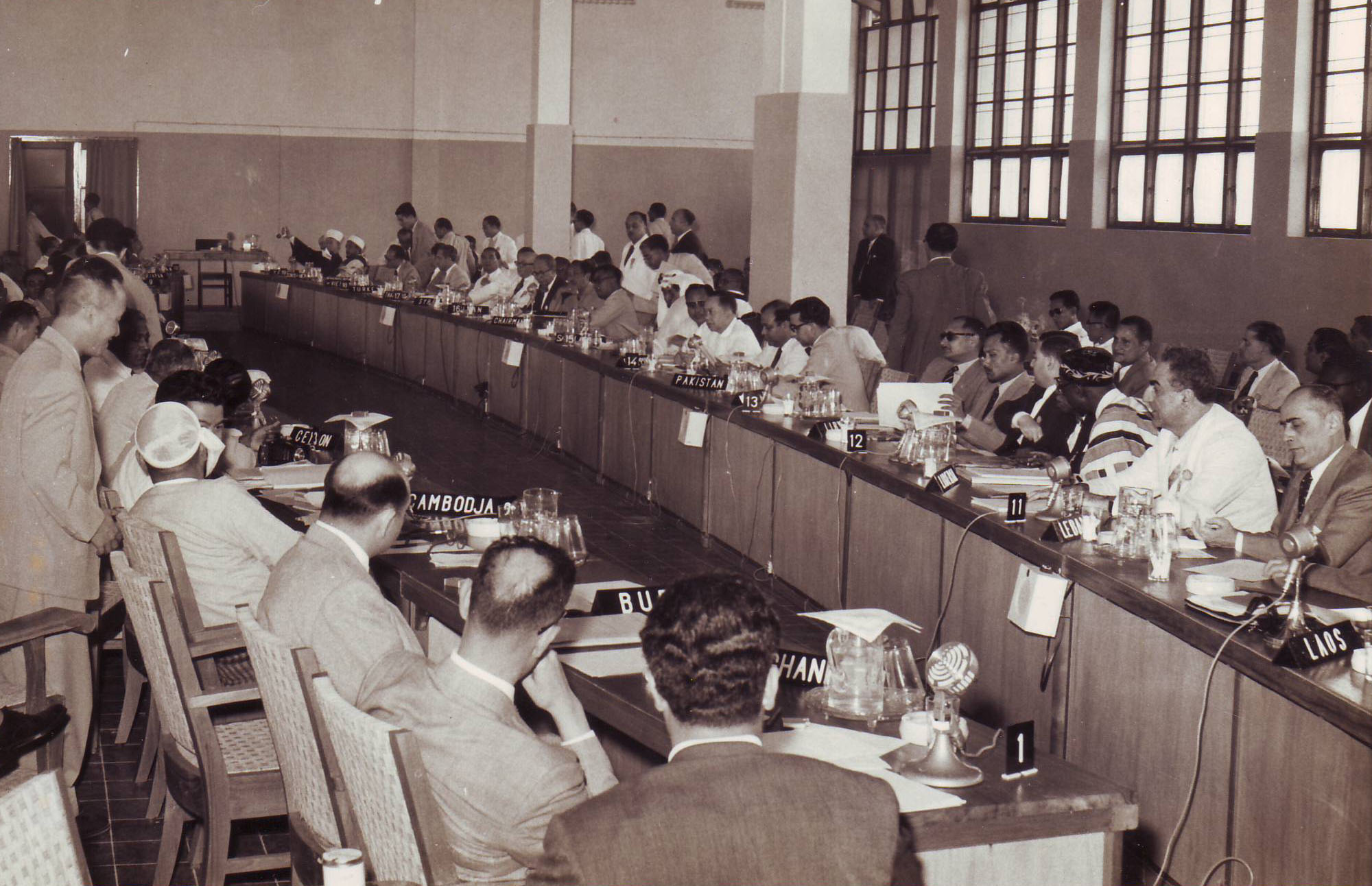
In April 1955, representatives of twenty-nine Asian and African countries gathered in Bandung, in a building once used by a European colonial social club. Their presence announced a change larger than any individual speech. Peoples whose futures had been discussed in imperial capitals were now discussing the world among themselves. Indonesia, independent through a revolution the Netherlands had tried to defeat, was helping to set the agenda.1
Yet the republic that challenged colonial domination abroad would also deny freedoms at home, invade a neighbouring territory and struggle over the meaning of self-determination within its own borders. Its history since 1918 contains remarkable achievements alongside devastating exclusions. Indonesia became a nation through choices, institutions and shared struggles; keeping that nation together never settled the question of how its people should be governed.
An empire built for other people’s benefit
In 1918, the Dutch East Indies brought together societies with different languages, religions and political traditions under an unequal colonial administration. Dutch power had expanded unevenly, through trade, alliances and conquest, rather than through three centuries of uniform control. Plantation districts, densely populated Java and resource-producing outer islands occupied different positions within the imperial economy. The colony’s boundaries created a framework that nationalists would eventually claim for themselves.2
Sugar, rubber, petroleum and other exports connected the archipelago to international markets, but commercial expansion did not distribute opportunity evenly. European companies enjoyed privileged access to capital and influence; colonial authorities worked with local hierarchies while maintaining racial distinctions in law and administration. Indonesians were workers, cultivators, merchants and entrepreneurs within this system, rather than simply passive victims. Nevertheless, their capacity to determine its rules remained severely restricted.3
The Dutch Ethical Policy, introduced in 1901, promised improvements in education, irrigation and welfare. Its limited educational openings helped produce doctors, teachers and officials who encountered European political ideas while experiencing colonial discrimination. The Volksraad, first convened in 1918, offered representation without responsible self-government. The contradiction mattered: people educated to administer a supposedly improving empire could also ask why its promises stopped short of political equality.4
Learning to imagine Indonesia
Nationalism emerged from overlapping movements rather than a single awakening. Sarekat Islam carried political discussion beyond small educated circles; Muhammadiyah developed reformist Islamic education and welfare, while Nahdlatul Ulama, founded in 1926, defended religious learning and traditions through its own networks. Labour organizers and communists offered another language of emancipation. Islam, socialism and national independence could overlap, compete or divide movements from within. Neither religion nor class supplied one inevitable political destination.5
At the Second Youth Congress on October 28, 1928, participants affirmed a common homeland, nation and language: Indonesia. The embrace of Bahasa Indonesia, developed from Malay, was especially consequential. National unity would not depend simply on imposing Javanese, the language of the largest ethnic group. A shared language could connect people across regional differences without requiring those differences to disappear. The pledge expressed an ambition; schools, newspapers, organizations and later state institutions gradually gave it everyday substance.6
Women were also defining what emancipation should include. The women’s congress held in Yogyakarta in December 1928 addressed education, child marriage and women’s position within marriage. Its participants did not agree on every religious or legal question. Their organizing nevertheless challenged the assumption that national freedom could be discussed solely through male leadership and constitutional arrangements. The future nation would also be made in classrooms, households and arguments about who could decide a woman’s life.7
Sukarno’s nationalist movement drew these different constituencies towards an uncompromising demand for independence, although unity remained difficult. Dutch authorities imprisoned him after his arrest in 1929 and later sent him into internal exile. Communist uprisings in 1926–1927 had already provoked extensive repression. During the 1930s, collapsing export markets damaged livelihoods and constrained colonial education spending. Reform and prosperity offered little protection when the colonial state treated organized challenges to its authority as threats to be contained.89
Japanese liberation, Japanese empire
Japan’s invasion in 1942 destroyed Dutch colonial government with startling speed. European supremacy, presented for generations as a durable fact, proved militarily vulnerable. Japanese authorities removed Dutch officials and used Indonesians in administrative and political roles, while mobilizing nationalist and Islamic leaders for wartime purposes. Sukarno and Mohammad Hatta cooperated with the occupation authorities, seeking room for independence within arrangements designed primarily to serve Japan.10
That cooperation cannot turn occupation into liberation. The Japanese imposed forced labour, requisitioned resources and subjected populations to coercive controls. Romusha labourers were sent into dangerous conditions, sometimes far from home, and many never returned. Shortages and the catastrophic famine in Java in 1944–1945 compounded the suffering. Mortality estimates remain uncertain, but the human disaster extended far beyond the European prisoners and internees most familiar in Western accounts.1112
Occupation nevertheless changed the means available to nationalists. Administrative experience, mass mobilization and military training helped prepare people who would participate in the revolution. As Japan approached defeat, preparations for independence acquired urgency. Younger activists pressed Sukarno and Hatta to act without waiting for Japanese authorization. On August 17, 1945, after Japan announced its surrender, they proclaimed Indonesian independence. Indonesians had seized an opening created by imperial collapse; their freedom was neither a Dutch concession nor a Japanese gift.10
Independence was proclaimed before it was secured
The proclamation did not produce immediate control over the archipelago. British forces arrived to oversee the Japanese surrender and recover prisoners, while Dutch authorities sought to restore their position. Armed republican resistance, notably at Surabaya in November 1945, demonstrated that restoring colonial rule would require war. Revolutionary authority also developed from below, through youth organizations, local committees and armed groups whose ambitions did not always coincide with those of republican leaders.13
The revolution involved coercion and atrocities as well as collective hope. Europeans, Indo-Europeans, Chinese communities and Indonesians identified with colonial authority suffered attacks during the upheaval. Recognizing those victims does not make Dutch reconquest a neutral peacekeeping operation. Research by Dutch and Indonesian scholars has established that Dutch forces employed extreme violence systematically, including torture, extrajudicial executions and the destruction of villages. Political and military leaders tolerated practices subsequently minimized as isolated excesses.14
Dutch offensives in 1947 and 1948 captured territory and republican leaders but failed to eliminate the republic. Guerrilla resistance, diplomacy and growing international pressure undermined the colonial strategy. The United Nations demanded a political settlement; overseas supporters challenged Dutch claims to be restoring legitimate order. Indonesian leaders’ suppression of the communist challenge at Madiun in 1948 also affected American calculations. The revolution was won through military persistence and international negotiation, rather than a simple battlefield victory.1315
On December 27, 1949, the Netherlands transferred sovereignty to a federal United States of Indonesia, excluding the disputed western half of New Guinea. The settlement also imposed financial obligations on the new state. Within months, Indonesia moved towards the unitary republic established in August 1950. For Indonesians, independence remained dated to August 17, 1945: the later transfer recognized a sovereignty already proclaimed and defended. Colonial rule ended through struggle, while leaving institutions, inequalities and unsettled territorial questions behind.16
A nation held together by more than ancestry
The republic had to make citizenship meaningful across an immense diversity of communities. Its founding ideology, Pancasila, combined belief in God, humanity, national unity, representative deliberation and social justice. The constitutional settlement did not establish an Islamic state, although religion retained a public role. This accommodation mattered to a Muslim-majority country that also included Christians, Hindus, Buddhists and diverse local traditions. Agreement on the republic did not require agreement on every source of moral authority.17
National education and the Indonesian language offered ways to participate beyond one’s birthplace. They could widen horizons and enable communication across the archipelago, while also privileging officially approved accounts of history and identity. The central problem was therefore more demanding than creating a national flag or anthem. Could a shared political community protect regional cultures and different beliefs while distributing power and resources fairly? Independence made Indonesians responsible for answering a question colonial government had largely avoided.
Bandung gave this national project international reach. From April 18 to April 24, 1955, the conference brought governments with markedly different political systems into discussion. Its communiqué condemned colonialism and racial discrimination, supported self-determination and proposed economic and cultural cooperation. Respect for sovereignty and resistance to great-power pressure offered smaller and recently independent states a language for collective action. Bandung helped prepare the ground for the Non-Aligned Movement, formally established in 1961; it was not itself that movement’s founding meeting.118
The achievement was substantial without producing a unified third bloc. Participants disagreed about communism, security alliances and their relations with Washington and Moscow. Indonesia’s free and active foreign-policy tradition sought room to judge international questions independently. Its significance lay in asserting that postcolonial countries could help shape world affairs, rather than serving permanently as theatres of somebody else’s strategic contest.18
When democracy acquired a guide
Indonesia’s national elections in 1955 demonstrated extensive political participation and the strength of nationalist, Islamic and communist constituencies. No party secured a majority. Coalition instability, disputes over the constitutional place of Islam and regional rebellions placed parliamentary government under growing pressure. These difficulties were real, but they did not establish that Indonesians were culturally incapable of democracy. Authoritarian government emerged through political decisions, institutional conflicts and the choices of powerful actors.19
Sukarno increasingly argued that party competition undermined national unity. Martial law in 1957 strengthened the army; his decree of July 5, 1959 restored the powerful presidential framework of the 1945 Constitution and dissolved the Constituent Assembly. Guided Democracy reduced independent parliamentary constraints while elevating presidential authority. Nationalization of Dutch enterprises also expanded the army’s economic position. The state’s struggle to escape foreign economic control helped empower institutions with their own domestic interests.2021
Sukarno attempted to balance nationalism, religion and communism, but those forces were not easily reconciled. The army and the Indonesian Communist Party, or PKI, competed as economic distress and political confrontation intensified. Foreign intervention aggravated the struggle: Washington had covertly supported regional rebels in 1958. Indonesia’s later confrontation with the creation of Malaysia further strained its international relationships. Sovereignty remained a powerful rallying cry, even as citizens possessed fewer effective means of questioning those who spoke in its name.2223
The destruction of the left
During the night of September 30–October 1, 1965, a military movement abducted and killed six senior army generals. Responsibility for the operation and the extent of involvement by particular communist leaders remain subjects of historical investigation. Major General Suharto suppressed the movement and used the crisis to destroy the PKI. The deaths of the generals did not establish the collective guilt of millions of party members, unionists or people associated with the broader left.24
Across 1965–1966, the army and allied civilian forces carried out mass killings. Historians commonly estimate roughly 500,000 deaths, although the total remains uncertain. Many others were imprisoned without trial. Local patterns varied, but the violence was not merely an uncontrollable eruption of ancient communal hostility. Military direction, organization and permission were fundamental. Declassified American records demonstrate detailed knowledge of the killings and support for the army’s campaign against the left.2425
The destruction reached deep into social and cultural life. Teachers, agricultural organizers, artists and relatives of the accused could carry lasting stigma. Women associated with Gerwani, the left-wing women’s movement, were demonized through sexual propaganda and subjected to imprisonment and sexual violence. Anti-communism became a means of defining respectable citizenship and restricting political possibility. Families learned that speaking about a missing relative could endanger the living; silence became part of the regime’s social inheritance.26
Development under the New Order
Suharto gradually displaced Sukarno, becoming acting president in 1967 and president in 1968. His New Order promised stability, development and an end to ideological conflict. Elections continued, but the governing organization Golkar, bureaucratic pressure and military power prevented an equal contest. The armed forces’ dual-function doctrine legitimized their participation in civilian administration and politics. State institutions became channels through which a narrow leadership managed participation, rather than mechanisms through which citizens could freely replace it.27
Economic transformation was nevertheless real. Improved macroeconomic management, agricultural investment, expanding education, health provision and manufacturing raised living standards. Oil revenues helped finance development before later diversification. Poverty declined substantially during the decades before the Asian financial crisis, although historical rates depend on the poverty measure used. Families experienced these changes through schooling, electricity, roads and new employment. Treating development as nothing but propaganda would erase important changes in ordinary lives.28
Those gains coexisted with patronage, restrictions on labour and privileged access to contracts and resources. Suharto’s family and connected business groups accumulated enormous advantages. Land and forest concessions could enrich distant decision-makers while imposing costs on local communities. Development strengthened the regime’s legitimacy without making corruption incidental to its operation. The more difficult question was why improved livelihoods had to be purchased with political obedience, and who could challenge projects presented as serving the nation.27
The transmigration programme relocated families from crowded islands, especially Java, to other parts of the archipelago. It promised land and opportunity, and some settlers improved their circumstances. But settlement also changed relationships over customary territory and local political power. Migrants were not interchangeable agents of the state, and receiving communities were not obstacles to progress. Their different experiences explain why population policy could become an argument about whose homeland was being developed, and on whose terms.29
Culture, belonging and the right to remember
The Indonesian language became the medium of a rich national literature, but culture remained a contested political space. Pramoedya Ananta Toer, imprisoned without trial and sent to Buru island, developed the historical stories that became his Buru Quartet while denied normal freedom to write. His novels examined the emergence of national consciousness through lives constrained by colonial and indigenous hierarchies. The independent state’s suppression of those books exposed its anxiety about people interpreting emancipation for themselves.30
Chinese Indonesians faced another contradiction. Some business families developed close relationships with powerful officials, while Chinese cultural expression and language were restricted and the wider community remained vulnerable to discrimination. Association with commercial wealth did not provide collective security. The distinction between citizens imagined as authentically indigenous and those treated as perpetually foreign survived the end of European government. National belonging could reproduce exclusion even when it spoke the language of unity.31
Meanwhile, batik, wayang, gamelan and numerous regional practices continued to develop through transmission, commerce and performance. UNESCO’s recognition of Indonesian batik in 2009 and gamelan in 2021 acknowledged living traditions, rather than remnants of a culture frozen before modernity. Their international visibility also raises a useful question: who defines national culture when practices belong to particular communities as well as the republic? Cultural confidence is strongest when people can sustain traditions without being reduced to official symbols.32
East Timor and the limits of anti-colonial principle
Indonesia’s invasion of East Timor on December 7, 1975 exposed a profound contradiction in its anti-colonial identity. East Timor had been a Portuguese colony, outside the Dutch East Indies. After Portuguese withdrawal and conflict among Timorese movements, Indonesian leaders presented intervention as a security necessity. Occupation and the subsequent annexation denied the Timorese the self-determination that Indonesian diplomacy had demanded for colonized peoples elsewhere.33
Military campaigns, forced displacement, hunger and disease devastated the population. Research for Timor-Leste’s truth commission placed the minimum conflict-related death toll for 1974–1999 at approximately 102,800, combining killings with deaths from hunger and illness; the figure is a lower-bound estimate, not a precise count of executions. Timorese resistance survived through armed struggle, underground organization, religious networks and international advocacy. The population was an active political community, not simply an object of Indonesian or foreign policy.34
In the UN-organized ballot of August 30, 1999, 78.5 per cent rejected special autonomy within Indonesia. Violence by pro-integration militias and Indonesian security elements followed, bringing further destruction and displacement before an international force intervened. Timor-Leste became independent on May 20, 2002. Its history requires Indonesia’s liberation narrative to be examined critically: a state created through resistance to empire could itself exercise domination over another people.33
1998: the end of obedience
The Asian financial crisis beginning in 1997 shattered confidence in the New Order. The rupiah collapsed, businesses failed and rising prices placed households under severe pressure. Financial weaknesses and politically connected borrowing intensified the shock. International rescue programmes became entangled with arguments about reform, sovereignty and social suffering. Development had promised security; suddenly people who had worked within its rules were exposed to decisions and debts over which they had little control.35
Students and other opponents demanded reform as the government’s authority eroded. Security forces killed students at Trisakti University in May 1998; rioting and attacks on Chinese Indonesians followed, including sexual violence against women. These events were not an uncomplicated popular celebration. On May 21, Suharto resigned after more than three decades in power. His departure opened political space without immediately dismantling the institutions, economic relationships or habits of impunity that had sustained him.36
Under President B. J. Habibie, political prisoners were released, press restrictions eased and competitive party politics returned. The 1999 elections and constitutional amendments adopted between 1999 and 2002 transformed the institutional framework. Presidential term limits, stronger rights protections and new checks on executive authority changed what citizens could demand. Indonesia’s first direct presidential election in 2004 made national leadership more directly answerable to voters. Reformasi was an achievement made through pressure and negotiation, rather than a democracy delivered from outside.37
A more open republic, unevenly experienced
Decentralization transferred substantial responsibilities to local government, bringing decisions closer to many communities while also creating new opportunities for local patronage. A freer press, unions, women’s organizations and civil-society groups widened public debate. Restrictions on Chinese cultural expression were relaxed, allowing more open celebration of identities previously treated with suspicion. The change was tangible, even where discrimination survived. Citizens gained possibilities that would have been difficult to imagine under Suharto.3839
Openness did not prevent communal violence or coercive religious politics. Constitutional protection of belief has coexisted with blasphemy prosecutions, obstacles to minority worship and pressure on people whose convictions or personal lives offend dominant groups. Islam itself encompasses competing traditions and political positions; reducing these conflicts to a contest between religion and modernity obscures Indonesian Muslims’ major contributions to education, democracy and pluralism. The practical test is whether equal citizenship survives disagreement about how others should live.1740
Women’s organizing also survived the destruction of the left and the New Order’s prescriptions of respectable wifehood and motherhood. Campaigners challenged domestic and sexual violence rather than accepting that abuses inside households lay beyond public responsibility. Parliament’s passage of sexual-violence legislation in April 2022 followed years of advocacy. It broadened the legal framework for protection, although a law’s existence cannot guarantee that survivors can obtain justice. The concerns raised in 1928 remained recognizably connected to contemporary struggles.2641
Aceh showed that a long conflict could be redirected. After decades of armed struggle and the devastation of the December 26, 2004 tsunami, the government and the Free Aceh Movement signed the Helsinki agreement on August 15, 2005. It provided for disarmament, withdrawal of non-organic security forces and political participation within an autonomous Aceh. The disaster added urgency, but peace depended on negotiations and choices. National unity did not have to mean continuing war.42
Papua and a disputed inheritance
Papua presents a different and unresolved history. The Netherlands retained western New Guinea after 1949; administration passed through the United Nations to Indonesia in 1963. In 1969, the Act of Free Choice relied on selected representatives under conditions that sharply restricted genuine choice, rather than a direct vote by all adults. The UN General Assembly took note of the Secretary-General’s report, but that procedure did not resolve the legitimacy dispute among Papuans.4344
Indonesian governments understand Papua as part of the territorial inheritance recovered from Dutch colonialism. Many Indigenous Papuans understand their experience through denied self-determination, racism, military violence and unequal control over land and resources. Papuan opinion is diverse, and peaceful political organizing must be distinguished from armed separatism. Armed groups have also attacked civilians. Acknowledging those attacks does not remove the state’s obligations to protect civilians or justify treating Indigenous communities as collectively suspect.4445
Special-autonomy arrangements, infrastructure and public spending have not settled these grievances. Displacement, restrictions on scrutiny and disputes over extractive industries and large development schemes continue to damage trust. For people whose customary land is taken or whose village becomes unsafe, national development can sound like a promise made elsewhere. Papua therefore tests whether Indonesia’s anti-colonial inheritance protects people against domination, including domination exercised by their own state.4546
Prosperity, power and the unfinished present
Contemporary Indonesia has moved far from the plantation colony of 1918. Urban employment, education and a much larger economy have reshaped aspirations and family life. The World Bank records substantial poverty reduction since the early 2000s, alongside persistent insecurity and a shortage of sufficiently productive, well-paid jobs. National averages conceal major differences in opportunity. Independence has expanded what is possible without making social justice, promised in the constitutional settlement, a completed achievement.47
Migration has also changed the meaning of participation in national life. Indonesians working abroad, including women in domestic and care work, support families while facing recruitment debts, exploitation and separation from children. Their labour connects the republic to households and economies across Asia and beyond. Protection depends on recruitment practices, enforceable rights and cooperation across borders. Independence gives the state diplomatic standing; migrants’ experiences test how effectively it uses that standing for citizens whose work receives little prestige.48
Industrial policy now seeks greater value from resources such as nickel, central to stainless steel and battery production. Processing investment can provide jobs and strengthen bargaining power, but pollution, land disputes and pressure on workers or Indigenous communities complicate the gains. Human Rights Watch’s 2026 research documents such concerns around extractive and energy projects. The historical continuity is not that nothing has changed since colonialism; it is that control of land, labour and the rewards of production remains political.46
Joko Widodo’s presidency, beginning in 2014, combined infrastructure ambitions with growing criticism of weakened institutional checks. Prabowo Subianto, a former general, took office on October 20, 2024. Revisions to the armed-forces law in 2025 broadened access by serving officers to civilian posts, reviving fears that Reformasi’s boundary between military and civilian authority was being eroded. The government presents military adaptation as necessary; critics judge it against the experience of the New Order.4049
Public memory remains part of this contest. Prabowo’s designation of Suharto as a national hero in November 2025 prompted opposition from historians and rights advocates. Disagreement concerned more than the reputation of a dead president: commemorating development while marginalizing violence shapes what younger Indonesians understand their state to have done. Recognition of achievements and accountability for crimes require historical judgement, not the official replacement of one with the other.50
By November 2026, arguments over democracy involved both repression and institutional resistance. Rights organizations criticized restrictions on dissent and the new criminal code, effective in January 2026. A Constitutional Court ruling on October 15, 2026, however, required military-justice reform within two years to allow civilian trials for ordinary crimes committed by soldiers. That ruling set a requirement for change, not proof of completed accountability. Indonesia’s democratic institutions remain arenas of struggle whose outcomes should not be written in advance.4951
What Indonesia changed in the world
Indonesia’s diplomatic influence continues through ASEAN, the G20 and a foreign policy that resists compulsory alignment. Its entry into BRICS in 2025 was presented by the government as another expression of independent engagement and cooperation among developing countries. Membership does not make Indonesia the subordinate of one new centre of power. The enduring Bandung question is how countries can widen their choices within an international economy and security system they cannot control alone.52
The larger historical significance is both political and cultural. Indonesians transformed an imperial administrative space into a shared national community, sustained by language, organizing, education and collective memory. They helped establish that Asian and African peoples could speak as makers of international order. Those achievements deserve recognition alongside the victims of state violence and the communities whose belonging remains conditional.
From 1918 to the present, Indonesia’s history has repeatedly reopened the relationship between independence and freedom. Sovereignty could end Dutch authority without guaranteeing democracy; development could improve lives while restricting voices; national unity could create solidarity while silencing difference. The republic’s future belongs to Indonesians who continue to argue, organize and insist on a place within it. A nation of its own remains most meaningful when its people can make it their own.