A thematic collection · 1918–1939
Nations, Borders and Belonging
Who belonged to the nation—and who had the power to decide?
A new border could promise freedom while leaving people uncertain about their place within it. The replacement of empires by states claiming national legitimacy raised questions that treaties alone could not resolve: who constituted the nation, which communities could claim self-government and what protection remained for those whose identities did not fit the official account?
This collection begins with Austria-Hungary’s collapse and the choices made at Paris, then follows the competing national and revolutionary claims confronted during Russia’s civil wars. Palestine brings rival national aspirations into the same territory under British mandatory rule. Amritsar exposes the unequal standing of colonized people within an empire whose claims to justice were challenged by its own violence.
The essays approach belonging through political power as well as identity. Recognition of a nation did not guarantee equal rights to everyone living within its claimed territory, and a demand for national freedom could coexist with exclusions inside the movement advancing it. The longer histories of Canada, India and Türkiye extend these questions beyond 1939, while keeping Dominion autonomy, anti-colonial independence and Indigenous sovereignty distinct.
Read across the stories
A suggested reading sequence
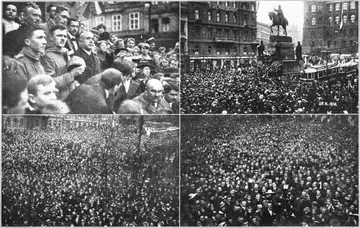
The Empire That Disappeared: The Collapse of Austria-Hungary
Begin with the collapse of Austria-Hungary, where national independence brought new states alongside unresolved disputes over territory, minorities and belonging.
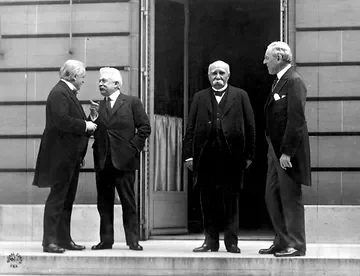
Read on LeafletParis, 1919: Who Had the Right to Decide the World’s Future?
Examine who could speak for a nation at Paris, whose claims shaped the settlement and whose future was decided by others.
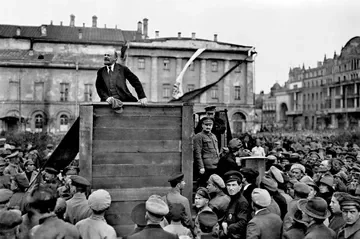
Read on LeafletThe Revolution That Survived: Russia’s Civil Wars and the Birth of the Soviet Union
Follow the intersection of national independence movements, civil wars and revolutionary state-building across the former Russian Empire.
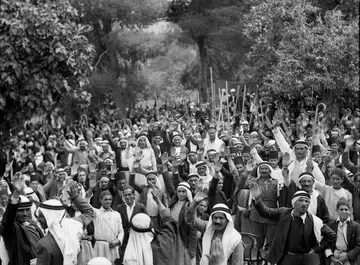
Read on LeafletPalestine Under the Mandate: The Great Arab Revolt
Consider Palestinian Arab and Zionist national aspirations, British mandatory authority and competing claims to the same country.
Read on LeafletAmritsar: The Massacre That Shook the British Empire
Examine the gulf between imperial claims to justice and the treatment of Indian civilians, and its consequences for the struggle for self-government.
Read on LeafletFour Empires Fell. What Replaced Them?
Examine the successor states, minorities and displaced communities created by the collapse of four empires.
Read on LeafletThe Empire That Survived by Changing Its Rules
Examine national autonomy alongside Indigenous dispossession, racial exclusion and competing forms of Commonwealth belonging.
Read on Leaflet1919: The Year the World Refused to Obey
Ask whose claims to nationhood received recognition and whose demands the victors rejected.
Read on LeafletFrom Sultan to Republic: How Turkey Overturned the Postwar Settlement
Follow contested sovereignty, population displacement and the making of a new national state.
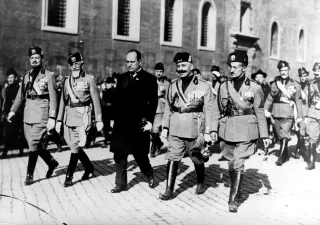
Read on LeafletHow Fascism Entered Government: Mussolini and the Destruction of Italian Democracy
Explore how Fascism defined national loyalty through obedience and excluded Italians who resisted its claim to speak for the nation.
Read on Leaflet

The New World Order · 1918 to the present
Follow the longer history
Canada’s Long Independence: From Empire to an Unsettled World
Trace Canada’s changing sovereignty alongside citizenship, constitutional rights and the continuing exclusion and dispossession of Indigenous peoples.
Read on The World RecastIndia’s Unfinished Freedom: Independence and the Struggle for Belonging
Follow the struggle for independence into Partition, migration and continuing arguments about citizenship and national identity.
Read on The World RecastFrom the Ottoman Heartland to Türkiye: Sovereignty in the Shadow of Empire
Follow the transition from imperial heartland to republic and the changing terms of national identity and political belonging.
Read on The World RecastIndonesia: From Colonial Possession to a Nation of Its Own
Explore the making of a shared Indonesian identity and the different histories of citizenship, East Timor and Indigenous Papuan grievances.
Read on The World RecastPoland: Independence Won, Lost, and Reclaimed
Examine minority rights, genocide, postwar border changes, forced migration and contemporary arguments about citizenship.
Read on The World Recast
Place these stories in time
Return to the events behind this collection, with sources and links to the longer stories.