A thematic collection · 1918–1939
Democracy, Dictatorship and Revolution
Why did people defend, abandon or overthrow parliamentary government?
The collapse of an old regime did not settle what should replace it. Parliaments, revolutionary parties, monarchies and military leaders offered different answers to the question of legitimate government. Their promises could draw on demands for land, national independence, social security or order, while the institutions they built determined how far people could challenge those who governed them.
These essays begin with Russia’s civil wars and the consolidation of Bolshevik power, then consider parliamentary authority during Britain’s General Strike and the relationship between foreign intervention and armed institutions in Nicaragua and Iraq. Manchuria and Ethiopia bring military initiative and fascist imperial ambition into view. These are distinct histories: neither a labour dispute nor an independence movement should be mistaken for a common route towards dictatorship.
Read across the cases to distinguish promises from practices. Who could organize, vote, publish or refuse an order? What happened when an army or party claimed to embody the nation more faithfully than its representative institutions? The selection offers starting points for those questions, without assuming that democratic survival or authoritarian victory was predetermined.
Read across the stories
A suggested reading sequence
The Revolution That Survived: Russia’s Civil Wars and the Birth of the Soviet Union
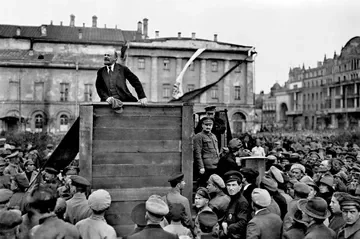
Begin with the gap between revolutionary promises and the centralized party state that emerged from Russia’s civil wars.
Read on LeafletNine Days That Shook Britain: The General Strike of 1926
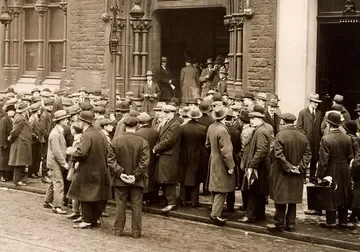
Compare the British government’s defence of parliamentary authority with organized labour’s claims, and examine the use of emergency powers during the General Strike.
Read on LeafletSandino's War: The Nicaraguan Rebellion Against American Intervention
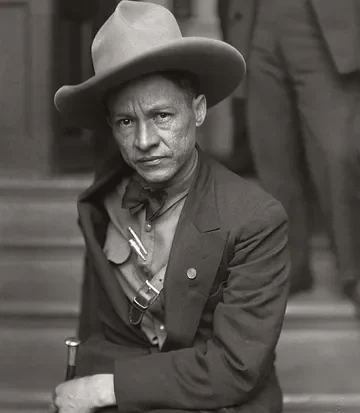
Follow resistance to American intervention into the question of who would control Nicaragua’s armed institutions and its political future.
Read on LeafletIraq, 1920: The Rebellion Against a New Empire
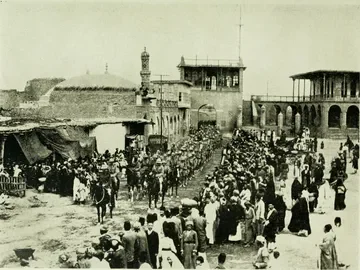
Examine how rebellion against British rule helped reshape the institutions and monarchy through which Iraq would be governed.
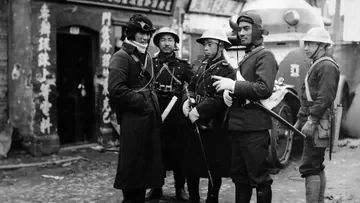
Read on LeafletManchuria: The Invasion That Challenged the League of Nations
Consider the relationship between military initiative, civilian authority and imperial expansion in the seizure of Manchuria.
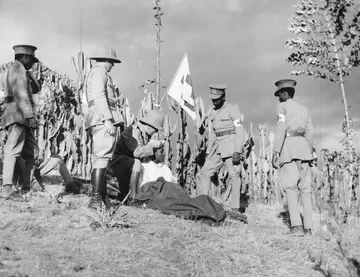
Read on LeafletEthiopia Stands Alone: Mussolini’s Invasion and the Failure of Collective Security
Examine fascist Italy through its invasion of Ethiopia, connecting the regime’s ambitions with colonial violence and Ethiopian resistance.
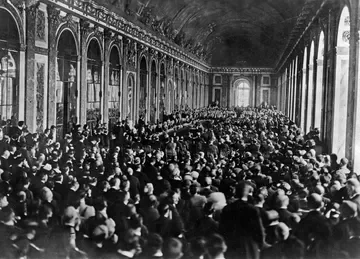
Read on LeafletFour Empires Fell. What Replaced Them?
Explore why the fall of dynastic authority produced different political orders rather than a single democratic future.
Read on LeafletFrom Sultan to Republic: How Turkey Overturned the Postwar Settlement
Consider how the abolition of dynastic authority created a republic without settling questions of political participation.
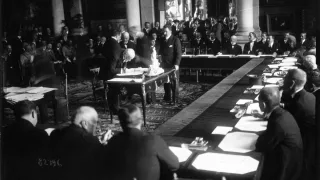
Read on Leaflet1919: The Year the World Refused to Obey
Compare revolutionary hopes, popular mobilization and the efforts of governments to contain them.
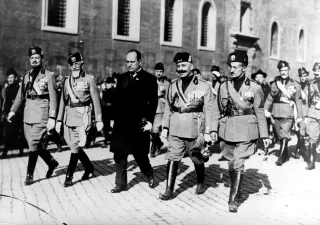
Read on LeafletHow Fascism Entered Government: Mussolini and the Destruction of Italian Democracy
Examine how political violence, conservative accommodation and royal decisions helped Mussolini dismantle parliamentary democracy between 1919 and 1926.
Read on Leaflet
The New World Order · 1918 to the present
Follow the longer history
From the Ottoman Heartland to Türkiye: Sovereignty in the Shadow of Empire
Follow the longer history of republican institutions, political participation and military intervention in Türkiye, from the aftermath of empire to the present.
Read on The World RecastEthiopia: Independence and Revolution
Follow the defence of Ethiopian sovereignty into restoration, revolution and competing visions of political belonging.
Read on The World RecastIndonesia: From Colonial Possession to a Nation of Its Own
Trace Guided Democracy, the mass killings of 1965–1966, Suharto’s New Order and the democratic transition after 1998.
Read on The World RecastPoland: Independence Won, Lost, and Reclaimed
Explore the erosion of interwar democracy, communist rule, Solidarity and the negotiated transformation of 1989.
Read on The World Recast
Place these stories in time
Return to the events behind this collection, with sources and links to the longer stories.