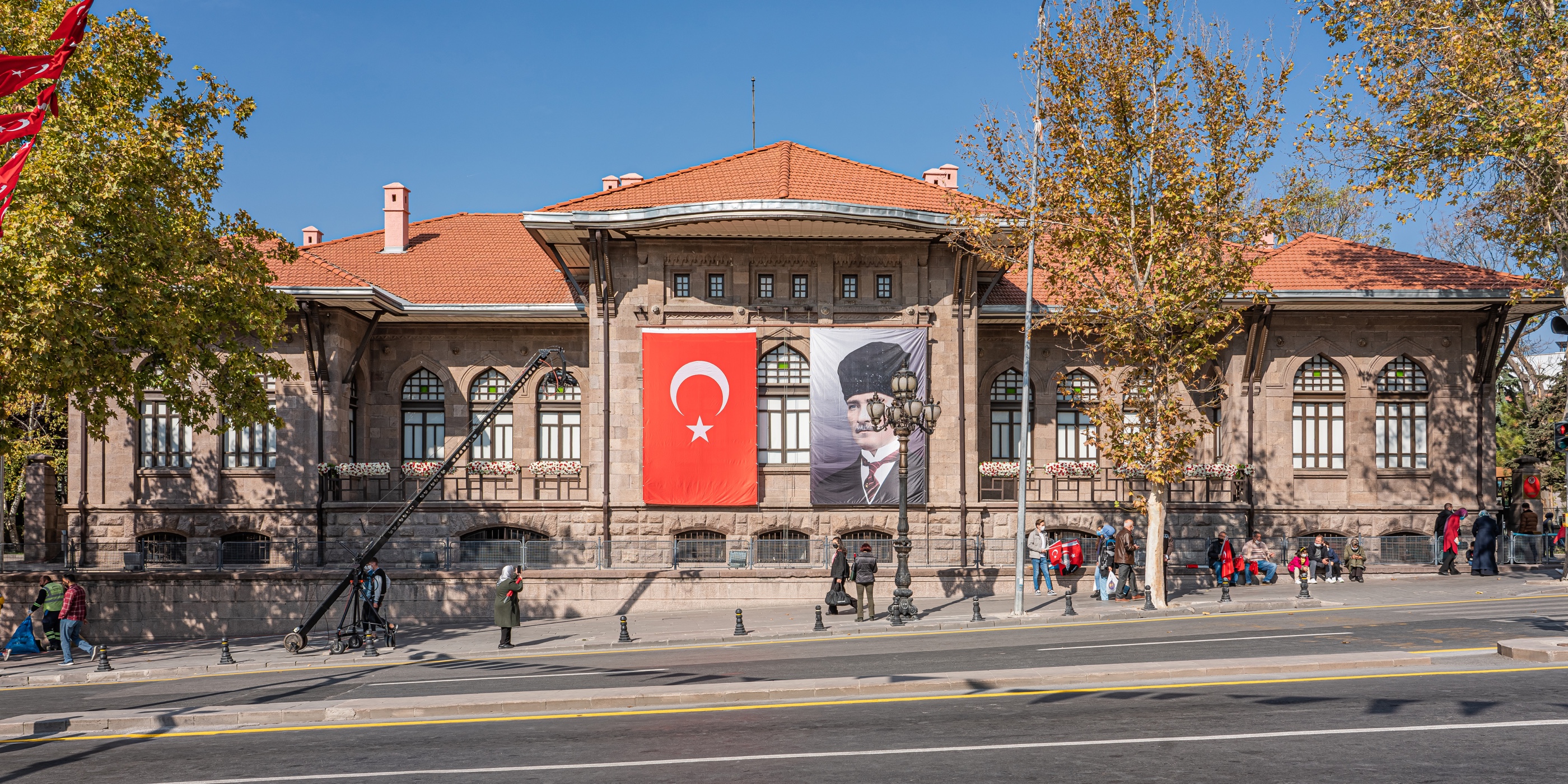
The empire ended, but the questions it left behind refused to disappear. Who possessed sovereignty? What held a country together? Could independence survive economic dependence? How much difference could the state accommodate before its leaders began to fear disintegration? In Türkiye, these questions have travelled from the battlefields of the War of Independence into classrooms, factories, polling stations and family arguments.
Within a few generations, an overwhelmingly rural society became an urban, industrial and digitally connected country. Women entered professions their grandmothers could scarcely have imagined. Villages emptied into cities, workers built lives in Europe, and popular culture crossed borders once patrolled by imperial armies. Yet progress brought neither political agreement nor lasting economic security. The republic inherited an imperial state's fear of fragmentation while promising that sovereignty belonged to the nation. Much of its subsequent history has concerned who could speak for that nation.
When defeat did not end the war
For the people of Anatolia and eastern Thrace, November 1918 offered little resemblance to peace. The Armistice of Mudros, signed on October 30, ended Ottoman participation in the Great War, but followed years of mobilization, displacement, hunger and bereavement. The Balkan Wars had already driven Muslim refugees into the imperial heartland. Wartime deportations and mass murder had destroyed Armenian communities in the genocide of 1915–1916. Anatolia entered the postwar years profoundly altered, its losses extending through families, neighbourhoods and the economy.12
Allied occupation threatened further dismemberment. Foreign warships appeared off Istanbul; Greek troops landed at İzmir on May 15, 1919. The Treaty of Sèvres, signed in August 1920, envisaged a severely restricted Ottoman state, foreign-controlled arrangements for the Straits and extensive territorial losses. It never became an effective settlement, but its implications gave resistance an urgent purpose. For many Muslims, the issue was whether they would retain a homeland under their own authority.1
Mustafa Kemal's arrival at Samsun on May 19, 1919, became the republic's foundational starting point, although resistance emerged through many local organizations and commanders. The Erzurum and Sivas congresses helped give it political direction. When the Grand National Assembly opened in Ankara on April 23, 1920, it created a rival centre of authority to the sultan's government in occupied Istanbul. The movement initially drew together religious conservatives, nationalists, Ottoman officers and local notables whose preferred futures were far from identical. Victory required turning this coalition into an army and an administration. Sakarya in 1921 checked the Greek advance; the Great Offensive in August 1922 broke it. Women carried supplies, worked, organized and sometimes fought, while households supported armies after years of exhaustion. Greek and Turkish civilians suffered atrocities and displacement during the wider conflict. For Turkish national memory, victory meant deliverance from partition; for Anatolia's Greeks, defeat meant catastrophe. These memories describe different experiences of the same devastated landscape.13
Lausanne, and the homes left behind
The sultanate was abolished on November 1, 1922. At Lausanne, İsmet İnönü negotiated international recognition of the new order, with the peace treaty signed on July 24, 1923. Ankara became the capital in October, and the republic was proclaimed on October 29. The move inland expressed a change in political imagination: the country would be governed from the centre of its national struggle rather than the seat of a vanished empire.13
Lausanne also removed the capitulations, the privileges through which foreign powers had exercised jurisdiction and economic advantages within Ottoman territory. This mattered beyond diplomatic prestige. Independence meant the ability to legislate, tax and govern without inherited foreign exemptions. Nevertheless, the settlement did not resolve every frontier question. Mosul remained outside Türkiye after the subsequent settlement with Britain and Iraq; Hatay joined Türkiye in 1939 under circumstances Syria continued to contest.3
For ordinary people, the most intimate consequence was the compulsory Greek–Turkish population exchange agreed in January 1923. Its categories were primarily religious: Orthodox Christians from Türkiye and Muslims from Greece, with specified exceptions, including Istanbul's established Greek community and Western Thrace's Muslims. Language did not necessarily match nationality. Turkish-speaking Orthodox Christians and Greek-speaking Muslims could find themselves assigned to unfamiliar homelands. Many Orthodox Christians had already fled before the convention. Those arriving in Türkiye likewise brought grief, skills, foodways and memories that official resettlement could not neatly arrange. The mübadele became part of family history as much as national history. A stronger territorial state emerged alongside the destruction of an older, unequal but deeply interwoven social world.4
A revolution in the schoolroom and the household
Atatürk's reforms sought to make sovereignty visible in everyday life. The caliphate disappeared in 1924; religious educational institutions came under the unified education system. The Swiss-derived Civil Code of 1926 changed marriage, divorce and inheritance, establishing civil marriage and prohibiting polygamy. The Latin-based alphabet followed in 1928. Surnames, clothing regulations, calendars and measurements made the transformation tangible in documents and daily routines. These changes were neither conjured from nothing nor confined to symbols. Ottoman reformers had already expanded schools, debated constitutional government and struggled over women's position. Republican leaders inherited those arguments and accelerated them through a much more concentrated state. Alphabet reform supported a wider literacy campaign and a new cultural orientation, while also placing an additional barrier between later generations and Ottoman written records.5
Women gained the parliamentary franchise and eligibility for election in 1934. This was a substantial achievement, but accounts presenting women's emancipation solely as a gift from above conceal earlier activism. Women had organized, published and demanded rights before the republic; figures such as Nezihe Muhiddin pursued political participation in its early years. Legal reform widened possibilities without eliminating patriarchal authority, rural poverty or unequal access to education and employment.6
Nor did laiklik mean that religion simply retreated into private life. The Diyanet, established in 1924, placed important Sunni religious services under state administration. The republic abolished some religious authorities while creating another. For Alevis and other communities outside its dominant framework, that arrangement raised enduring questions about equality. For observant Sunnis, restrictions could feel like exclusion from a public life supposedly open to every citizen. The argument concerned who defined legitimate religion as well as where religion belonged.7
The limits of one national voice
The republic's promise of common citizenship coexisted with pressure to become culturally Turkish. The ruling Republican People's Party, the CHP, treated national unity as protection against renewed partition. Yet a state could demand loyalty without accepting the languages and identities through which some citizens understood themselves. Kurdish identity became an especially persistent challenge to this narrow conception of belonging.8
The Sheikh Said rebellion of 1925 combined religious and Kurdish dimensions; its suppression helped justify a wider authoritarian consolidation. Opposition parties were closed, and emergency powers reached beyond the rebellion itself. In Dersim in 1937–1938, military operations brought mass killing and forced displacement, overwhelmingly affecting an Alevi population speaking Kurdish languages. Treating these events merely as the extension of administration into a remote province obscures the suffering through which that extension occurred.8
For supporters, the early republic built institutions capable of defending a vulnerable country and dismantling inherited hierarchies. For those subjected to repression, it could make citizenship conditional on silence. Both experiences belong within its history. Atatürk's achievement in securing independence does not require pretending that state-building was bloodless, just as examining its violence does not erase the reality of foreign occupation and the struggle against it.
Factories for a country of villages
Political independence required an economy capable of sustaining it. The republic inherited agricultural poverty, weak infrastructure and shortages of capital and skilled labour. War and the removal of Armenian and Greek communities had also disrupted commercial networks and expertise. Building a national economy involved reconstruction, but also the transfer of property and opportunities within a society whose composition had been violently transformed. Early encouragement of private enterprise gave way to a stronger state role during the Great Depression. Devletçilik, or statism, meant public investment in industries that domestic capital could not readily establish. Railways, textile mills, banks and industrial enterprises became instruments of sovereignty. Soviet assistance contributed to industrial development, illustrating how pragmatically Ankara could seek resources beyond ideological boundaries.9
Education carried a similarly ambitious promise. The Village Institutes, established in 1940, trained rural teachers through a combination of academic study and practical work. They sought to make village children participants in development rather than leave the countryside waiting for expertise from the city. Their subsequent transformation and closure reflected disagreements over education, social hierarchy and the political implications of teaching people to question their circumstances.10
The benefits were uneven. A factory town offered wages, training and new social possibilities, while many villagers still confronted limited schooling, poor transport and heavy demands on agricultural resources. The state presented development as a collective national undertaking, but rural households financed much of that undertaking through taxation and labour. Their petitions, evasions and resistance complicate the image of a population simply receiving modernization. Economic policy thus carried a question that would survive every subsequent change of model: who should bear the cost of making the country stronger, and who would enjoy the security that strength was supposed to provide?11
Surviving another war, entering a colder one
Diplomacy had already strengthened the republic's position. Rapprochement with Greece and participation in regional agreements helped replace some wartime enmities with practical cooperation. The Montreux Convention of 1936 restored Türkiye's ability to remilitarize the Straits while regulating warship passage. It was a considerable gain achieved through negotiation, giving substance to the ambition of securing independence without constant military confrontation. That framework would remain important long after the political world that produced it disappeared. After Atatürk's death in 1938, İnönü confronted the Second World War with a country still marked by the previous generation's losses. Türkiye maintained a precarious non-belligerence for most of the conflict, bargaining with competing powers and avoiding invasion. Its declaration of war on Germany and Japan in February 1945 came near the end and did not entail major combat. Remaining outside the fighting was a major achievement, although neutrality brought hardship rather than comfort.12
Mobilization removed workers from production; shortages and inflation strained households. The 1942 Varlık Vergisi, or Wealth Tax, fell disproportionately and arbitrarily on non-Muslim citizens, forcing asset sales and damaging their businesses. Some unable to pay were sent to labour camps. The measure exposed the distance between equal citizenship and the economic nationalism practised by the state.13 After 1945, Soviet pressure over the Straits and territorial questions helped turn Ankara towards Washington. The Truman Doctrine and American assistance offered security and resources. Turkish troops fought under United Nations command in Korea, and Türkiye joined NATO on February 18, 1952. A country that had received Soviet support during its independence struggle now guarded a crucial flank of an alliance directed against Soviet power.12
This alignment shaped much more than military planning. Aid encouraged roads and agricultural mechanization; anti-communism helped police the boundaries of acceptable politics. Yet alliance also created dependence and suspicion. During the Cuban Missile Crisis, Washington privately linked the removal of Soviet missiles from Cuba to the subsequent withdrawal of American Jupiter missiles from Türkiye. The episode sharpened a recurring anxiety: decisions affecting Turkish security could be negotiated by larger powers. The Cold War therefore reinforced two impulses that often pulled against each other: seeking powerful allies and resisting the possibility of being treated as their instrument.14
The ballot box and the barracks
The election of May 14, 1950, brought the Democrat Party to power and ended CHP rule through a peaceful transfer. For many voters, especially beyond the established republican elite, Adnan Menderes represented recognition as well as an alternative government. Greater accommodation of religious expression, agricultural expansion and infrastructure spending gave political change a practical presence.15
The decade nevertheless undermined its democratic promise. Economic difficulties intensified, and the government increasingly pressured journalists, universities and political opponents.15 In September 1955, organized mobs attacked Istanbul's Greek community, with Armenians and Jews also targeted. Homes, businesses and places of worship were devastated. The pogrom accelerated the erosion of the city's remaining pluralism and demonstrated how quickly nationalist agitation could turn neighbours into targets.16
The military coup of May 27, 1960, removed the government. Menderes and two ministers were executed in 1961 after trials whose legitimacy remains deeply disputed. Their deaths became an enduring wound in conservative political memory. The following constitution expanded important liberties and institutional checks, but the intervention also established the military's claim to supervise elected politics. That contradiction became central to the republic: a broader public sphere could coexist with an unelected institution claiming authority to decide when politics had gone too far. Governments could invoke electoral victory to weaken restraint; officers could invoke the republic to overthrow governments. Citizens repeatedly faced competing claims to guardianship over sovereignty that was formally theirs.15
The village arrives in the city
The transformation most visible in family life was migration. Agricultural mechanization, population growth and the attraction of wages and education drew people towards Istanbul, Ankara, İzmir and industrial centres. Cities expanded faster than housing and services. Gecekondu neighbourhoods became places where newcomers built shelter and community while negotiating precarious relationships with landowners, officials and political parties. These residents transformed urban politics. Roads, water, transport, employment and recognition mattered as much as ideological declarations. Family and hometown networks helped people find work and establish themselves. The city did not simply absorb the village; migrants remade the city, carrying religious practices, regional identities and ambitions into neighbourhoods that established urban elites often regarded with disdain.9
Another route led abroad. The 1961 labour recruitment agreement with West Germany helped establish a migration system that outgrew assumptions of temporary employment. Workers sent money home, reunited families and built communities. The experience of gurbet became woven into songs, cinema and household decisions. Europe was increasingly a workplace and a family connection rather than only a diplomatic aspiration.17
Popular culture recorded these upheavals with an intimacy that development statistics could not. Yeşilçam films explored poverty, aspiration and the collision of social worlds. Arabesk gave powerful expression to longing, frustration and urban displacement. Its popularity challenged elite assumptions about respectable national culture. Meanwhile, literature and socially engaged cinema examined class, authority and exclusion. People were arguing over the country's future in parliament, but also through the stories and music they chose to recognize as their own.17
A turbulent democracy, and September 12
The 1960s and 1970s opened political possibilities that earlier governments had restricted. Trade unions organized, students mobilized, and socialist, nationalist, social democratic and Islamist movements competed over the meaning of development and justice. Industrial growth produced a larger working class; expanding education created expectations the economy and political system could not always satisfy. This ferment was neither inherently violent nor destined to destroy parliamentary government. Nevertheless, economic pressures, ideological polarization and organized political violence increasingly narrowed room for compromise. The military memorandum of March 12, 1971, forced a government from office and ushered in repression. During the later 1970s, assassinations, street fighting and attacks on vulnerable communities made insecurity part of ordinary life.18
Foreign conflict deepened the strain. After the Greek junta-backed coup in Cyprus in July 1974, Türkiye intervened militarily, invoking its guarantor role and the protection of Turkish Cypriots. The fighting and resulting division displaced civilians on a large scale. Many in Türkiye understood the operation as necessary protection; Greek Cypriots experienced invasion and the loss of their homes. The ensuing American arms embargo strengthened demands for greater defence independence.19
On September 12, 1980, the armed forces seized power under Kenan Evren. They promised order and imposed it through mass detention, torture, executions and sweeping restrictions on political organization. The 1982 Constitution strengthened state authority and constrained political participation. Security returned at a profound cost to rights and collective life. The generals also promoted a Turkish–Islamic synthesis as a defence against the left. Sunni religious instruction gained a stronger compulsory place in education. An institution presenting itself as guardian of secularism helped strengthen religion's role in national identity, leaving consequences that would extend far beyond military rule.18
Open markets, closed doors
Turgut Özal's era changed how people earned, spent and imagined prosperity. Market-oriented reforms launched in 1980 and developed under his civilian government after 1983 encouraged exports, reduced some controls and integrated Türkiye more deeply into global finance. Tourism, manufacturing and new businesses widened horizons, while consumer goods and commercial media changed the texture of daily life. New industrial centres in Anatolia helped produce business constituencies that combined religious conservatism with international commercial ambition. Their rise challenged the identification of modern economic life with an established secular metropolitan elite. Yet liberalization also exposed workers to insecurity and the country to financial volatility. The abundance visible in advertisements did not guarantee dependable wages or protection from inflation.20
Meanwhile, the Kurdish conflict became one of the republic's gravest crises. The PKK began its insurgency in 1984. Its attacks included killings of civilians; state counterinsurgency brought torture, disappearances and forced village evacuations. Hundreds of thousands were displaced, carrying the conflict's consequences into cities far from the fighting. Kurdish citizens' demands for language rights, representation and dignity could not reasonably be reduced to the objectives or methods of an armed organization.21
The 1990s brought unstable coalitions, corruption scandals and renewed struggles over religion. Military pressure in 1997 helped force Necmettin Erbakan's government from office; headscarf restrictions excluded observant women from important educational and professional opportunities. Alevis confronted discrimination and the trauma of the 1993 Sivas massacre. For different communities, the state's claim to protect social peace sat uneasily beside experiences of exclusion. The 1999 Marmara earthquake exposed failures in construction and public preparedness. The financial crisis of 2001 then shattered confidence in the governing parties. Together, catastrophe and economic collapse helped create an opening for a movement promising competent government and a more inclusive public life.2022
The promise of a different republic
The Justice and Development Party, the AKP, won power in November 2002. Erdoğan's movement attracted religious conservatives, entrepreneurs, voters exhausted by instability and some liberals who hoped to dismantle military tutelage. Its early appeal rested partly on allowing people previously treated as socially suspect to imagine themselves at the centre of the republic. Economic recovery had important foundations in reforms begun after the 2001 crisis. The AKP sustained that framework while benefiting from favourable international conditions. Growth, expanded healthcare access and infrastructure improved many lives. Families could experience political change through treatment at a hospital, a new road or a child entering university. These gains help explain support that accounts centred exclusively on ideology cannot capture.22
European Union accession negotiations opened in 2005. Reform appeared capable of connecting civilian government, individual rights and international recognition. Restrictions on Kurdish cultural expression eased in some areas, while the eventual relaxation of headscarf bans widened access to education and public employment. Yet reform was uneven, and European resistance, Cyprus and domestic political choices all complicated accession.23
The erosion of military power did not necessarily strengthen independent institutions. The AKP and the Gülen movement cooperated against established military and bureaucratic networks before turning bitterly against each other. Politicized prosecutions and growing control over state institutions compromised hopes of straightforward democratization. The central question was shifting: once the generals' political authority had been weakened, what would prevent elected leaders from concentrating power in their own hands?24
From Gezi to the presidential state
The Gezi protests of 2013 began over an Istanbul park and expanded into a much broader challenge to the government's exercise of authority. Demonstrators were diverse, but many objected to being governed as though electoral victory authorized decisions over every aspect of public space and personal life. Police violence deepened the rupture. Supporters of the government, meanwhile, often saw the mobilization through memories of earlier efforts to displace conservative governments.24
The attempted coup of July 15, 2016, brought a different and immediate danger. Civilians and members of the security forces resisted the putsch, and the attack on elected government failed. Ankara blamed the Gülen movement, which denied responsibility. The subsequent emergency extended far beyond the prosecution of those directly involved, bringing extensive dismissals, arrests and restrictions affecting journalists, academics, public employees and opposition figures. A constitutional referendum in 2017 approved an executive presidency, implemented in 2018. Power became more concentrated, while judicial independence and media freedom deteriorated. Calling this the removal of military tutelage describes only part of the change: the presidency acquired authority that weakened other restraints on government.24
Elections nevertheless retained political significance. Erdoğan’s re-election in 2023 demonstrated the durability of his support despite economic hardship and criticism of earthquake preparedness. Opposition victories in the 2024 local elections demonstrated continuing capacity to challenge the governing party. By late 2026, however, imprisonment of prominent opposition figures and court intervention in CHP leadership had badly disrupted that challenge. Özgür Özel and supporters formed the New Party following the leadership ruling. The government maintained that judicial proceedings were independent; opponents described a campaign to obstruct democratic competition. These developments revived an old problem in a new institutional setting. If the nation was sovereign, could those currently governing decide which rivals were permitted to organize in its name?25
Greater reach, greater exposure
Internationally, Türkiye developed ambitions beyond its earlier role as a dependable Western flank. Commercial networks, diplomacy, defence manufacturing and military deployments widened its reach. Its growing drone industry became an especially visible expression of technological capability and a desire to reduce dependence on foreign suppliers. Relations with NATO partners mixed cooperation with serious disputes. Purchasing Russia's S-400 air defence system led to Türkiye's removal from the F-35 programme in 2019. Relations with Moscow nevertheless remained competitive as well as transactional. After Russia's full-scale invasion of Ukraine, Ankara supported Ukrainian sovereignty while preserving important Russian economic connections and pursuing mediation.26
Syria brought these contradictions close to home. Ankara's military operations reflected security concerns, particularly over Kurdish armed organizations, while its support for opposition forces created additional commitments. The fall of Bashar al-Assad in December 2024 changed the regional setting without removing the problems of security, reconstruction and refugee return. Millions of Syrians had found refuge in Türkiye. Their presence transformed workplaces and neighbourhoods while placing demands on schools, housing and municipal services. Hospitality coexisted with exploitation and growing hostility, especially amid economic distress. Refugees became subjects of electoral argument even as families faced difficult decisions about whether returning was possible or safe.2627
The international adoption of the name Türkiye in 2022 expressed a further insistence on self-definition. Familiar at home, the name became part of a wider demand that the country shape how it was recognized abroad. The republic thus exercised considerably greater regional agency than its exhausted founders could have imagined. Its exposure also increased: foreign policy could shape the price of energy, border security, employment and relations between neighbours on the same street.28
The republic beyond its monuments
For households in the 2020s, sovereignty was also a question of purchasing power. Currency instability and high inflation eroded wages and savings. Efforts to restore stability brought higher borrowing costs and painful adjustments. A country could possess sophisticated industry and expanding international influence while many citizens struggled to secure housing or plan an independent adult life.29 The earthquakes of February 6, 2023, made the gap between national capability and everyday protection devastatingly visible. Alongside extraordinary public solidarity came anger over construction standards, enforcement and disaster response. Rebuilding required more than replacing buildings: it meant restoring livelihoods, communities and confidence that public institutions would protect life.30
Women's movements continued to challenge the idea that rights, once written into law, were permanently secured. Campaigns against domestic violence and femicide made protection within the household a public question. Türkiye's withdrawal from the Istanbul Convention in 2021 intensified that struggle. For activists, the issue reached beyond a treaty: it concerned whether the state would treat women's safety and autonomy as enforceable obligations rather than matters subordinate to family reputation or political convenience.31 The renewed Kurdish peace initiative offered another test. Following the PKK's 2025 decision to disband, parliament adopted a framework law in August 2026. By November, the central uncertainty concerned whether disarmament would develop into a durable political settlement. Language, representation, trust and accountability could not be settled through security arrangements alone.32
Türkiye's wider transformation remains substantial. Education, healthcare, urban life, women's activism, literature, film and internationally popular television have enlarged the country's possibilities and cultural presence. These changes belong to citizens who have repeatedly pushed beyond the roles assigned to them, as well as to the institutions of the state. The passage from Ottoman heartland to republic therefore illuminates something larger than the replacement of a dynasty. National independence created the power to remake society, but left unresolved how that power should be restrained and shared. More than a century after the Great War, the republic's unfinished undertaking is to make belonging secure enough to accommodate difference, and sovereignty meaningful in the lives of those who possess it.